
Context
Muta was conceived as an initiative focused on fostering a more conscious relationship with the environment through education, action, and collective participation.
The project required a visual identity capable of adapting to different moments and contexts while remaining open to reinterpretation as the platform evolves.
From the outset, the goal was to develop a living visual system—one that could transform alongside the ideas it represents.
The challenge
The challenge was to design an identity that could express transformation while maintaining structural clarity and recognizability.
The system needed to remain flexible and expressive while preserving a strong internal logic that allows it to scale across brand, digital experiences, and communication materials.
Muta’s visual language had to support constant variation while maintaining continuity across the platform.
The approach
The identity was built around a simple principle: designing for mutation.
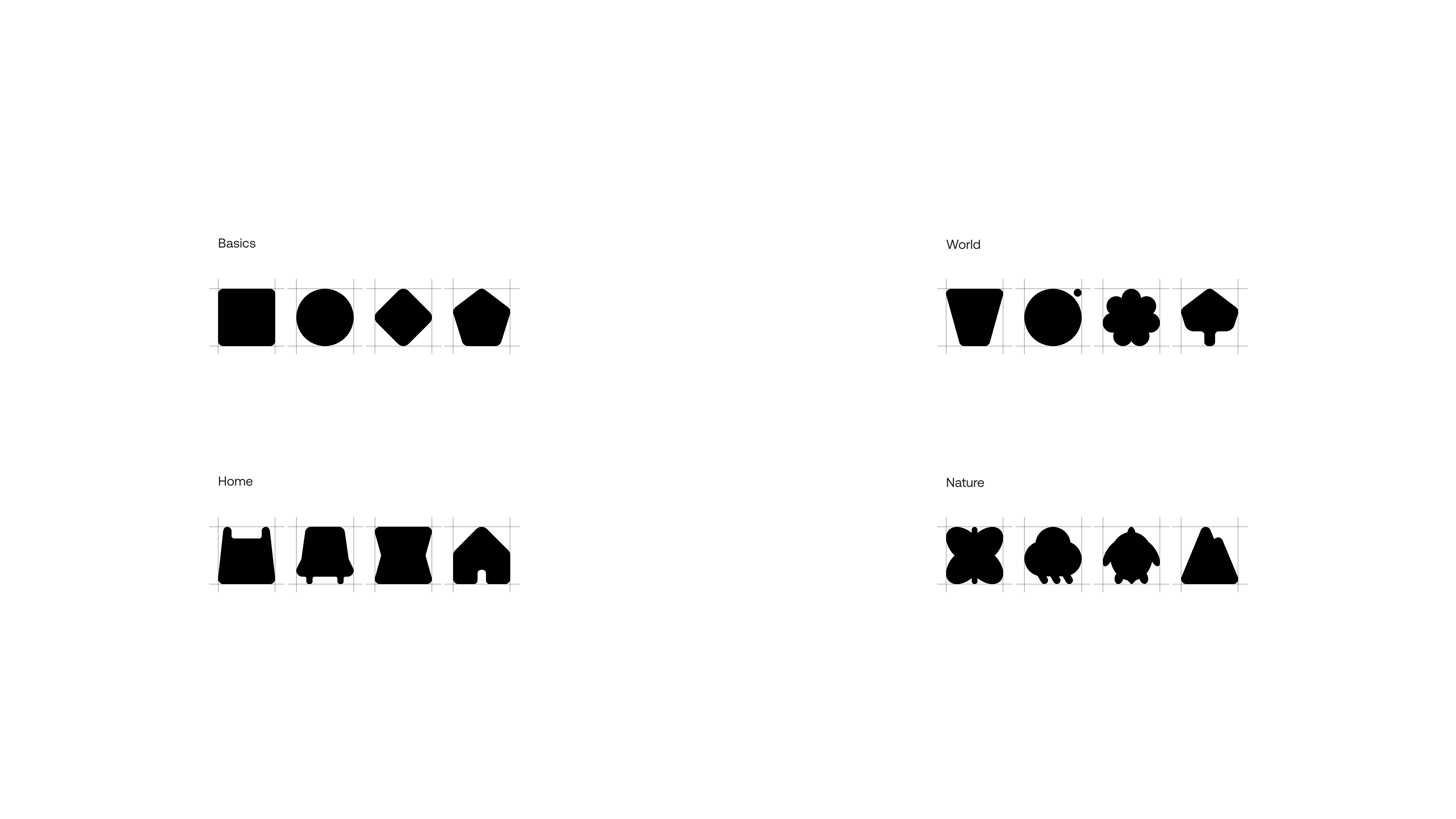
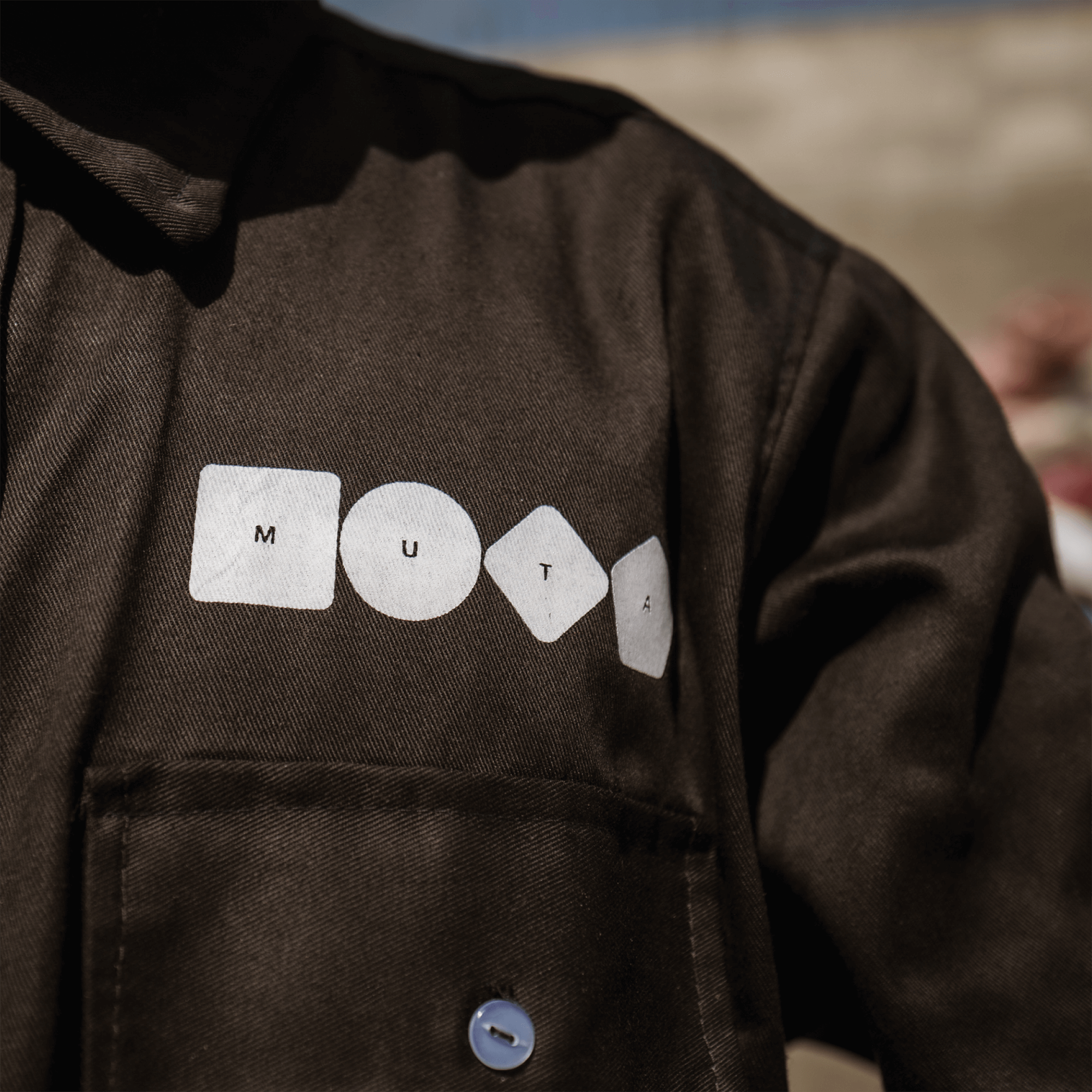
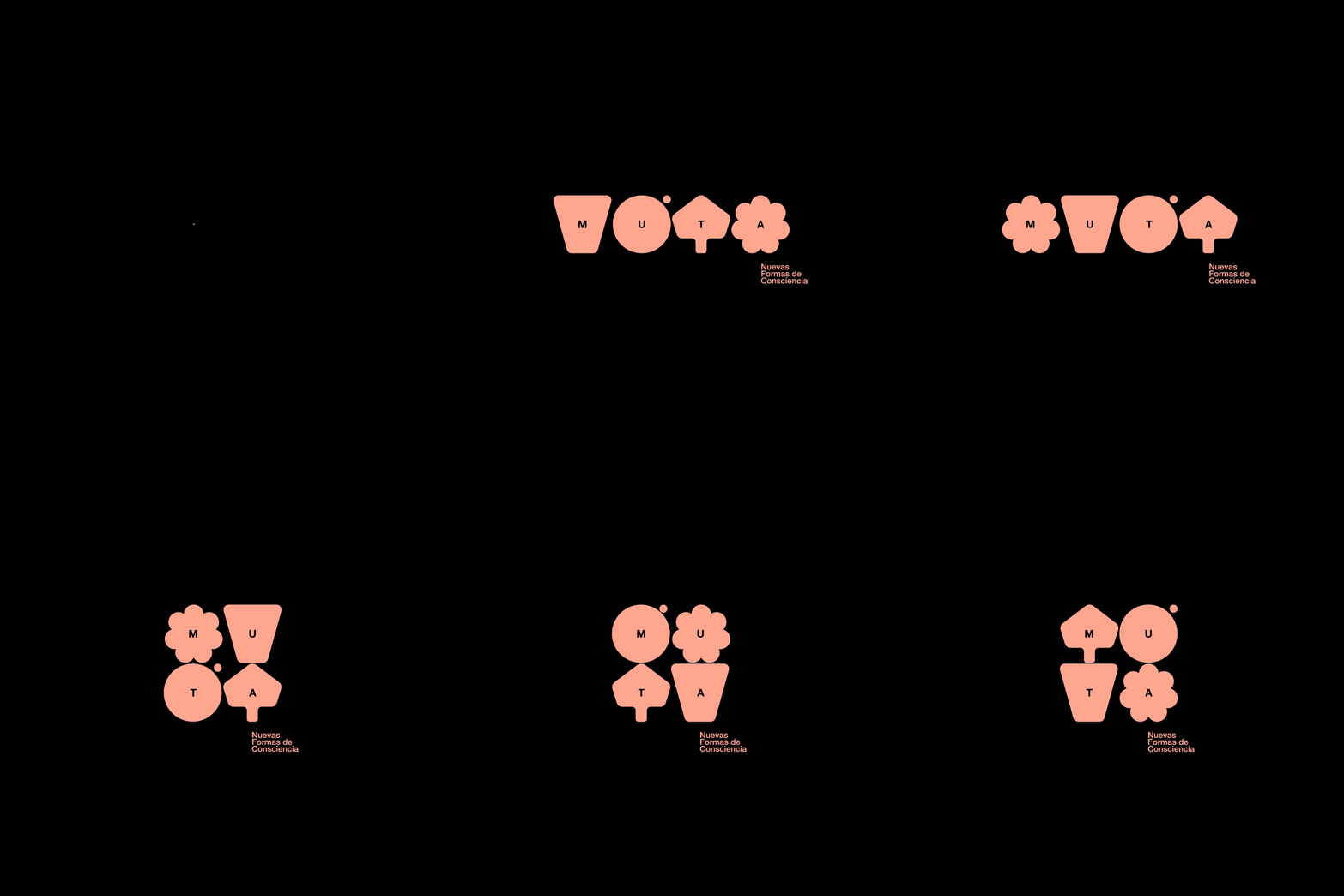
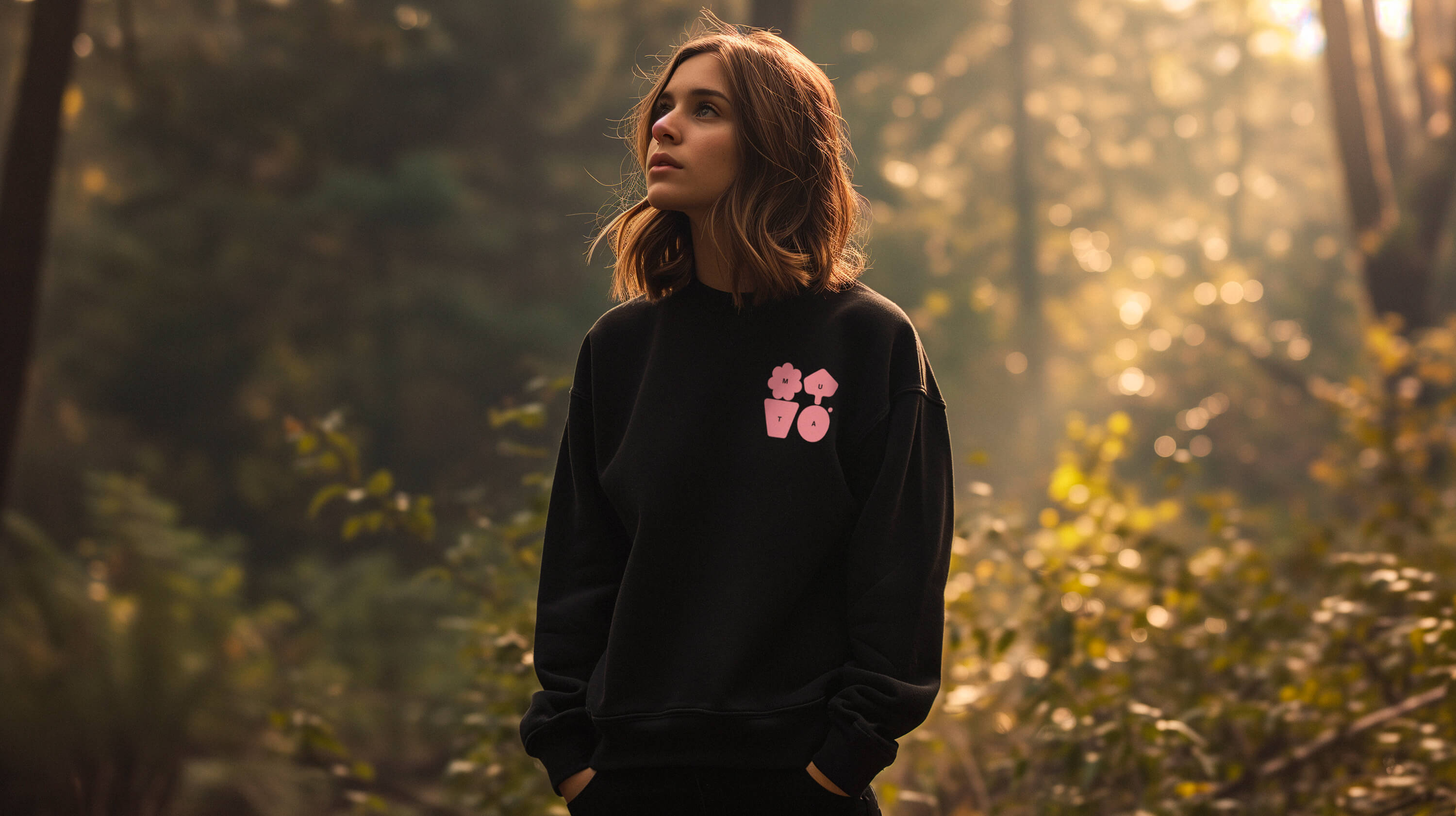
The logo was conceived as a dynamic system derived from the letters of the name itself. The forms transform, shift, and reconfigure while maintaining a shared structural relationship.
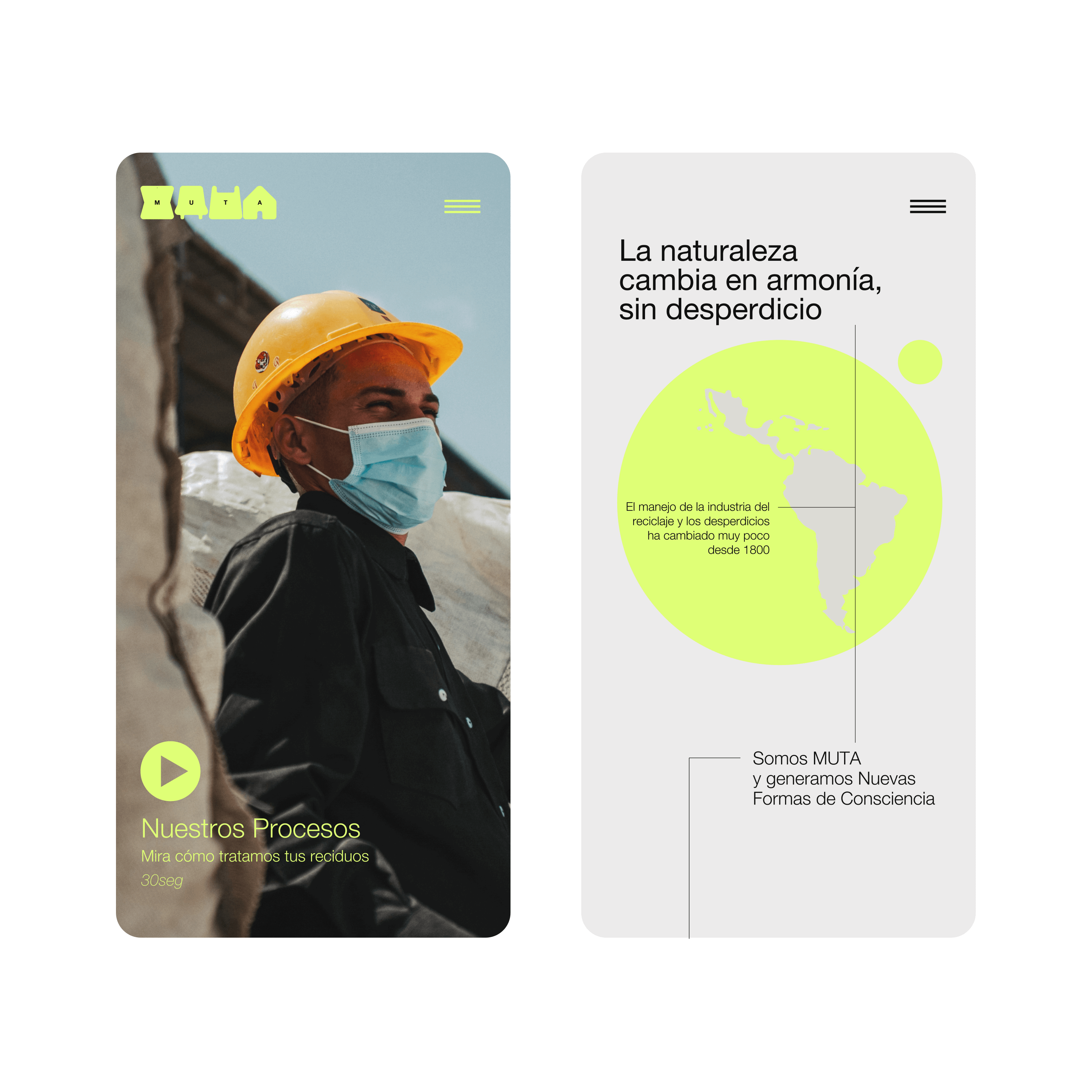
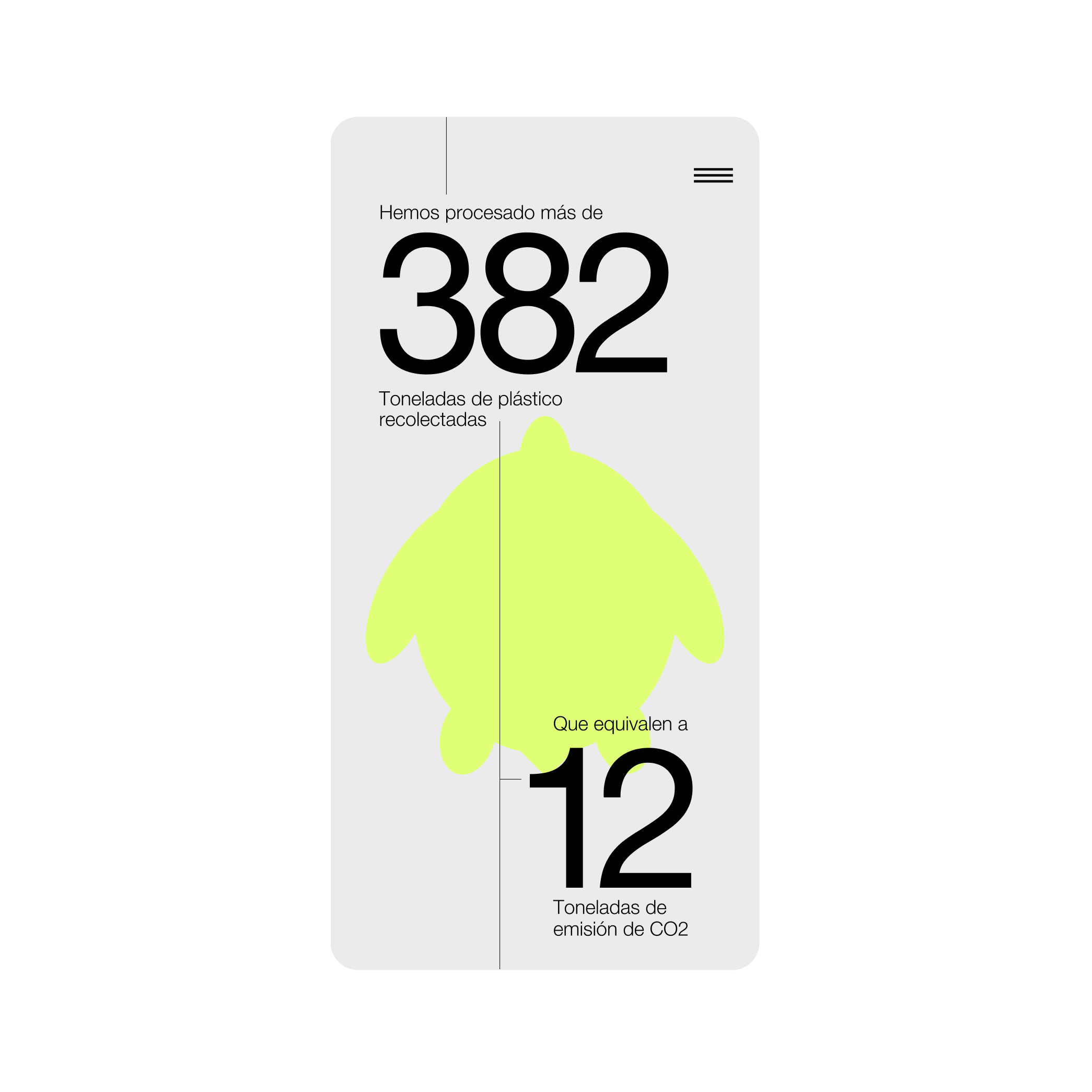
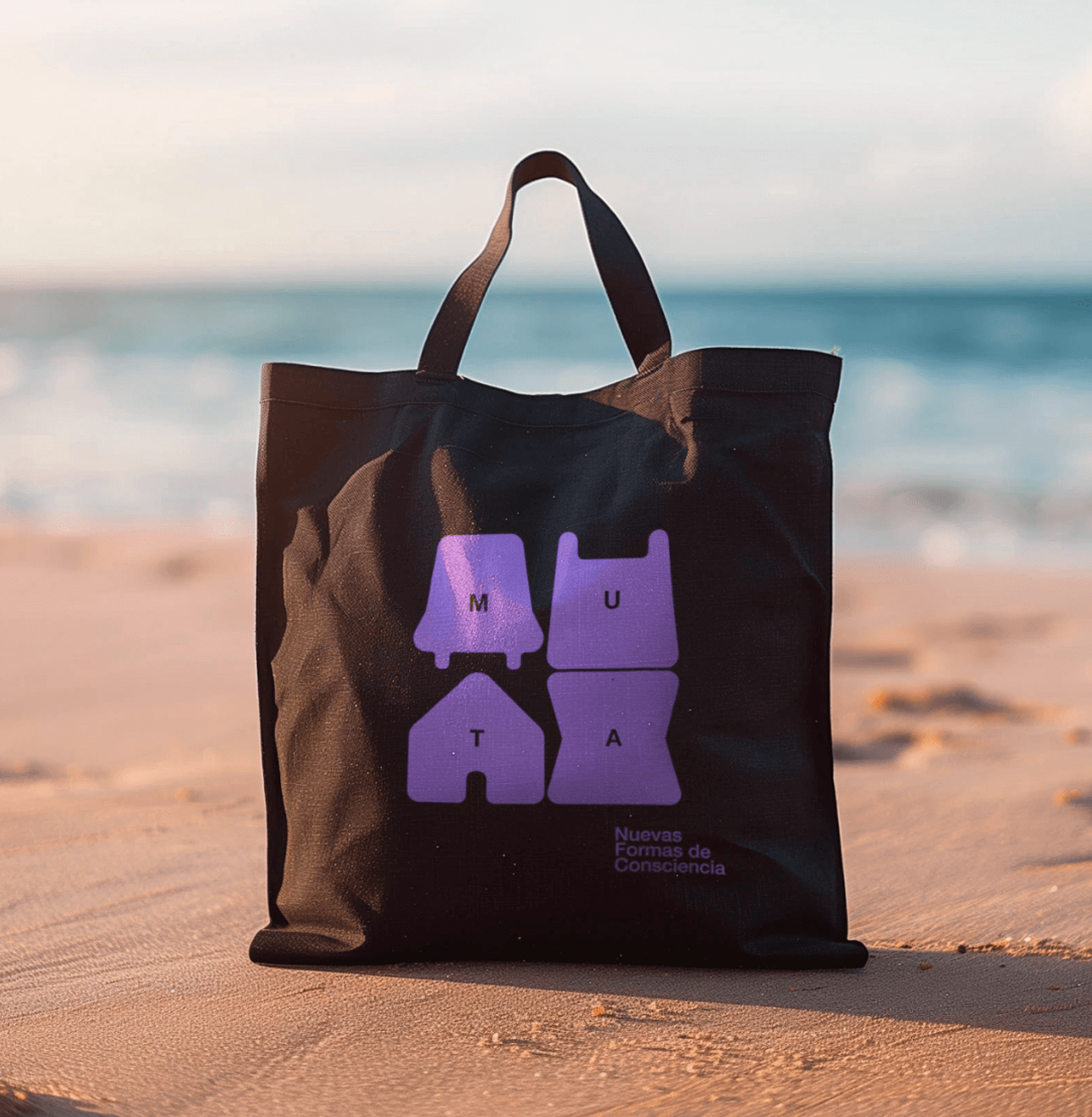
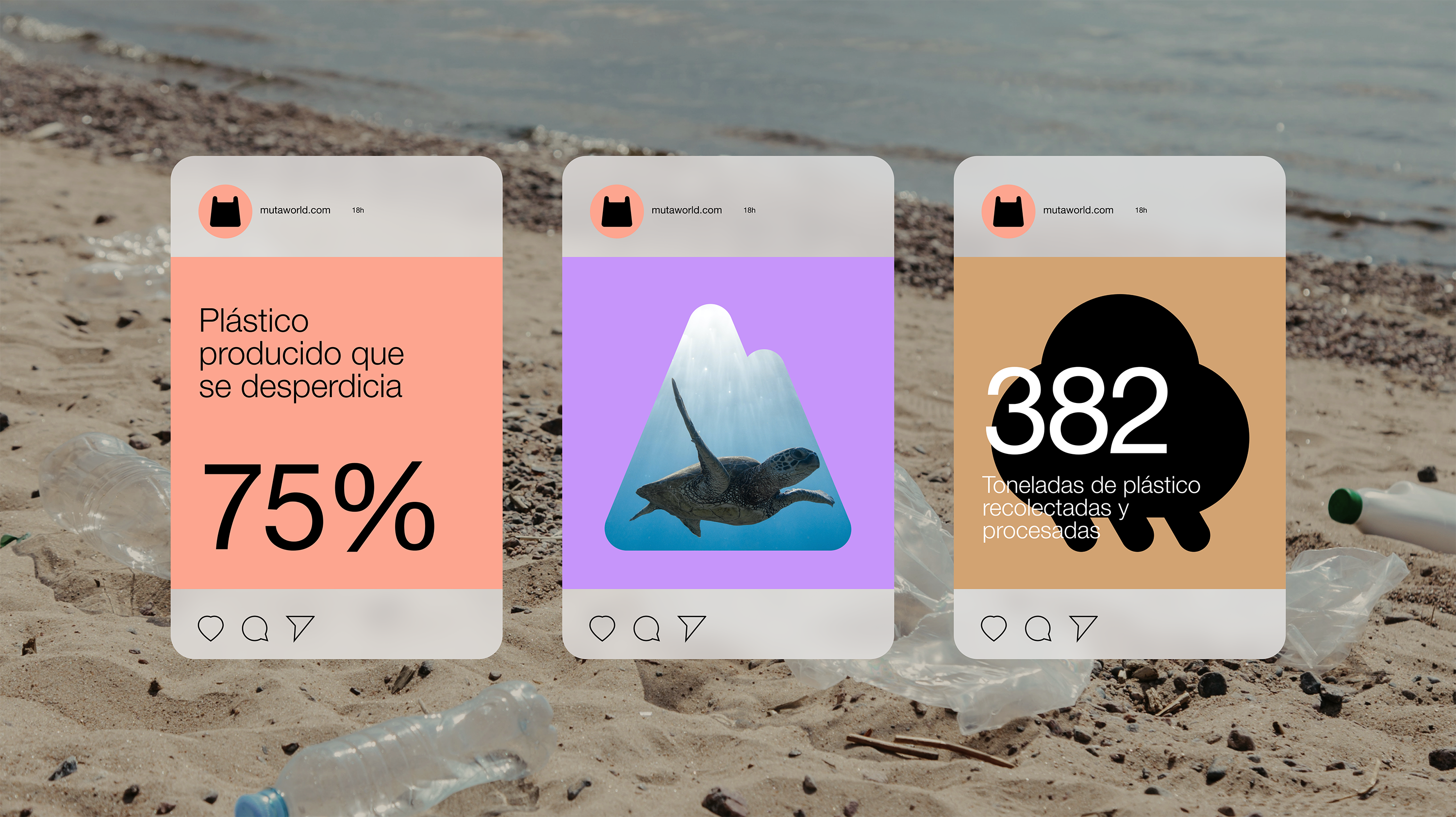
This logic extends across the entire visual identity. Shapes, compositions, and layouts operate as modular elements capable of adapting to different messages, formats, and moments.
Transformation becomes a rule of the system—embedded in its structure and behavior.
Outcome
The result is an open and evolving visual identity that allows the platform to grow without losing coherence.
Muta operates as a flexible system that embraces change while preserving recognizability across applications.
The brand’s ability to transform becomes its defining quality, enabling it to respond to new contexts, initiatives, and conversations over time.